Building Moral Character in Your Children
Ministries > Family Talk with Dr. James Dobson
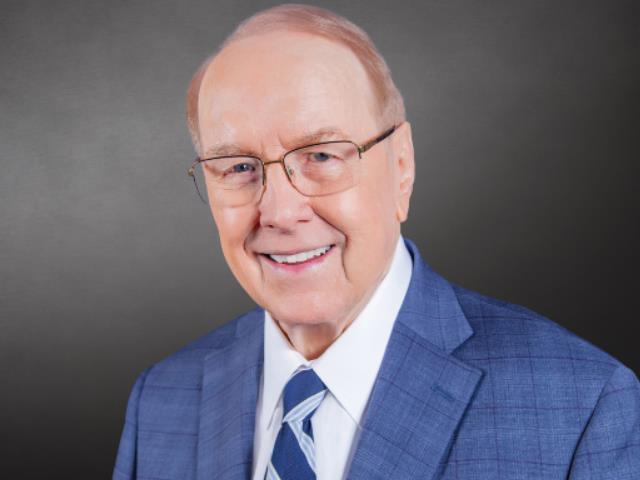
Children learn character best through great stories told at a parent's knee. On today’s edition of Family Talk, Dr. James Dobson welcomes Karen Santorum, joined by her husband, former Senator Rick Santorum, to discuss her book Everyday Graces: A Child's Book of Good Manners. Karen shares how classic literature can teach kindness, civility, and moral character in a me-centered culture.
Dr. James Dobson: Welcome everyone to Family Talk. It's a ministry of the James Dobson Family Institute, supported by listeners just like you. I'm Dr. James Dobson, and I'm thrilled that you've joined us.
Rodger Marsh: Well, welcome to Family Talk, the broadcast division of the Dr. James Dobson Family Institute. I'm Rodger Marsh. As parents and grandparents, we all want to raise children of strong moral character, kids who are honest, kind, and respectful of others. But in a culture that so often pulls in the opposite direction, how do we actually instill those values in the next generation? On today's edition of Dr. James Dobson's Family Talk, you'll hear a conversation Dr. Dobson had with former Pennsylvania Senator Rick Santorum and his wife Karen as they talked about how reading and great literature can shape a child's heart and character. Karen Santorum is the author of a wonderful book called *Everyday Graces: A Child's Book of Good Manners*. She and Rick share the simple, beautiful practice that's made all the difference in their own family. Here now to introduce today's program is Dr. James Dobson.
Dr. James Dobson: You know what we're about to hear would have been extremely helpful to me when my kids were small. I would have liked to have heard and interacted with someone about these issues because it really does go to the heart of parenting and grandparenting. I think our listeners who are in those categories are really going to enjoy what we're about to say. We're going to hear from two parents today who have used reading and literature to teach culture and character to their children. We're going to hear a little more about that during the program. I'm speaking of former Senator Rick Santorum and his lovely wife Karen. I have the highest respect for this couple and what they're doing with their own children. It will be inspirational to all of us to hear this recorded message because they set a godly example for other parents to emulate.
Rodger Marsh: Well, whether you are raising little ones at home right now or cheering on your grandchildren from the sidelines, this timeless wisdom will help you raise children of strong, godly character. Let's join Dr. James Dobson and his guests, Rick and Karen Santorum, for today's full edition of Family Talk.
Dr. James Dobson: Karen, we're going to talk primarily about your book today, but I want to ask you a question. You've got the potential of two very exciting careers, law and nursing, and you did all the training. Yet, you have poured your life into those six children. I think I know why. Tell other people why.
Karen Santorum: I just feel like my role as a mother is the most important job I will ever have. I should extend that. I believe that my role as a wife and mother is the most important thing I will ever do. I completely love it. I love raising my children. I love being there every day, and I feel very blessed to be able to be at home with them. It's really wonderful.
Rick Santorum: And she home-schools on top of that. She home-schools all those kids. So it's wife, mother, teacher.
Dr. James Dobson: Have you ever looked out at the women who are in these exciting careers and making money and advancing in the corporate world and so on? Have you ever looked at that and said, "Did I do the right thing?"
Karen Santorum: I really believe that the devil really tries to work on mothers at home. We all know he's the master of lies and he will do everything he can to try to make mothers at home feel that way, like we're so inadequate or we're not fulfilled. Through my prayer life and just my relationship with Jesus, I feel without a doubt this is the most important thing I can do. It is what God wants for me. It's what He wants for my family. In the early days, I did once in a while. Rick would be leaving to go to some nice event in a tuxedo, and I'd be on the floor cleaning up milk. I'd be like, "What's wrong with this picture?" But I feel so blessed and honored to be home, and I know that my presence in their life will make a difference.
Dr. James Dobson: Well, you've now written a book that comes right out of that relationship with those six kids and was motivated to some degree by the fact that there was not a similar book available. It's called *Everyday Graces: A Child's Book of Good Manners* by Karen Santorum, a foreword by Coach Joe Paterno. You guys are Pennsylvania all the way, aren't you? This is a little different than other books on manners. It's very different from most books on manners because this one is based on classic literature for the most part. You use stories, things that others have written primarily. You wrote some of them and Rick, you also wrote one of them, didn't you?
Rick Santorum: One minor addition.
Dr. James Dobson: Where did the concept for that come from?
Karen Santorum: I'm a big believer that children learn best through role modeling and stories. Rick and I love reading. We've read stories thousands and thousands of stories to our children. I just believe that we as parents are the first and primary role models of our children. But in addition to that, stories can serve as very good methods of teaching where children look to the characters in the stories and the messages. They love to emulate the behavior of the characters that you're reading about. I really believe that story time is a very important time. You put your child on your lap. It's a very important time for them of emotional and physical bonding with the parent. I think we all need to reassess our lives and to slow down a bit. Turn off the TV, turn off the radio, except for your program, and read to our children and spend that time.
Dr. James Dobson: Better not turn off my program. Those memories that I have of my mother reading to me are precious. One time, out of the blue, I didn't even ask her, she said, "I want to read you a book that meant a lot to me when I was a young girl." She chose a book that was primarily for girls, but I liked it. It was *Anne of Green Gables*. Don't you have a piece of that in the book?
Karen Santorum: Oh, we've read it to our children and the whole Tolkien series and C.S. Lewis, the Narnia series. Now we're reading Brian Jacques' the *Redwall* series book to the children. One of our favorite things is to light the fire and all get together as a family and pray and read books to our kids. It's so powerful.
Rick Santorum: As opposed to sort of going off doing your own thing and taking the kids by themselves locked into a television show, Karen's point about sitting a child on your lap, physically touching them, nurturing them, you being the storyteller, you interpreting that story, you nurturing them as opposed to turning it over to Hollywood is a fundamentally important part of parenting that has been being lost.
Dr. James Dobson: It's a great mistake, I think, to get to going so fast that we don't have time for those moments with our kids because they're only going to be there for a short time. Now let's talk about these classic stories. They're not all classic; some of them are more current, aren't they? Describe what you were looking for. How can you teach good manners through things like Aesop's Fables and things of that nature?
Karen Santorum: I have found with my own children that when I sit them down and lecture them, they sort of tend to turn me off. What I love is when you read a good story and there's a good moral lesson involved, they tend to get it better. I have some funny examples. My son John, a couple of years ago, he was practicing his baseball swing in our kitchen and put a huge hole in the kitchen wall. It was the sweetest thing because he knew Mom was going to be really mad and he would be punished. He came up to me and he said, "Mommy, I cannot tell a lie. I did it." I was thinking that was shortly after I'd read him the story of George Washington and the cherry tree, a story about telling the truth. There are so many other stories, and I'm sure all of your listeners out there have them where you've read a story to your children and later on you see it in their behavior where they're emulating someone from that story. We've known as far back as Plato and Socrates that that works. It's a great way and it's a fun way for children to learn.
Dr. James Dobson: Well, Jesus told stories. If you really want to move someone and help them understand a concept, you make it in story form.
Karen Santorum: That's true. All the parables that we learn so much from, it means a lot.
Dr. James Dobson: Let me ask you to read to us maybe one of your favorite stories from the book. This is a big book. I mean, it's big in size but it's also 400 pages. You've got a lot in here.
Karen Santorum: It's funny, Dr. Dobson, the book was actually about twice this large. It just shows you how much great literature there is out there. I made more trips to local libraries and the Library of Congress with my children. They were very much a part of this book. It was very much a family project where we sat down and read and sifted through stories and they really helped me through it and helped me to put it together. But there is so much good literature out there that parents can use. There's a sweet poem. It's called "Mr. Nobody." The author is unknown, but I think it's so sweet because children, my children often do this where you'll ask them who did it and they say, "I didn't do it." All six of them, "I didn't do it." I say, "Oh, so Mr. Nobody did it." So this poem sort of rang home for us. "I know a funny little man, As quiet as a mouse, He does the mischief that is done In everybody's house! Though no one ever sees his face, Yet one and all agree That every plate we break was cracked By Mr. Nobody. 'Tis he who always tears our books, Who leaves the door ajar, He pulls the buttons from our shirts, And scatters pins afar; That squeaking door will always squeak, For prithee, don't you see, We leave the oiling to be done By Mr. Nobody. He puts damp wood upon the fire, That kettles will not boil; His are the feet that bring in mud, And all the carpets soil. The papers that so oft are lost, Who had them last but he? There's no one tosses them about But Mr. Nobody. The finger marks upon the door By none of us were made; We never leave the blinds unclosed, To let the curtains fade. The ink we never spill; the boots That lying round you see, Are not our boots; they all belong To Mr. Nobody."
Dr. James Dobson: Now you have a little commentary after each one of these, don't you?
Karen Santorum: I do. Just as your parents do so much for you every day, you can respond by doing loving things for your parents. One of the best ways to express your love for your parents is through your actions. Even the smallest thoughtful act, like picking flowers for your mother, will demonstrate your love. Remember that Ralph Waldo Emerson said, "Good manners are made up of small sacrifices."
Dr. James Dobson: Now you had a particular mission in writing this book. What was it?
Karen Santorum: Well, I look at our culture today and I see how manners are sorely lacking. I see a bigger picture, and that is to try to help increase civility. Definitely, when you look at what's going on out there, there was a huge study by Public Agenda that showed that 43% of teachers spend more time disciplining children and they cannot teach effectively because the kids have very bad manners. 81% of those teachers say it's because parents are not disciplining their kids at home and teaching them good behavior. There are so many studies out there now that are confirming that we really need to work on this.
Dr. James Dobson: Especially boys. I talked about this in my book, *Bringing Up Boys*. There's a phenomenon known as the rude boy, and we're teaching it. What do they grow up with? They grow up with World Federation of Wrestling. Is that what it is? WWF? You know, they're taught through the sitcoms and everything else that they watch to be brash and rude and undisciplined. You're trying to counter that.
Karen Santorum: Definitely. I loved your book, *Bringing Up Boys*. It helped me immensely with my boys because they're very different than girls. The issues are very different and how you deal with them are. I just think that it's very important that parents instill these values in children. More importantly, I always tell my children the most important thing we need to do is to be pleasing to God every day.
Rick Santorum: The culture in America today is a me-centered culture. It's a culture about doing whatever you feel you want to do and don't worry about how it affects other people. Manners is really just the opposite of that. Manners is showing respect for someone else, actually looking out for their interest, whether it's opening the door or whether it's waiting in line or whether it's just being saying a kind word. All of those things, it's a change of worldview. Unless parents are instilling those values in their children at an early age, the culture around them is going to take them. If there was a study done, Mark Rich, who's up at Harvard, is a pediatrician, they did a study and the average kid in America, average adolescent in America, spends six and a half hours in front of a TV, a computer, or listening to a CD or the radio, and they spend 10 minutes with their parents. So who's raising these children? With this project, and it's Karen's project, what she's trying to say is, look, the culture's going to get them eventually, but you've got to prepare them. You've got to prepare them and lay that foundation. In a way, the storytellers of our culture are Hollywood today. This is an attempt to sort of bring back the storytelling into the home. Children need to be entertained, want to be entertained. This is a way to do it where you're the entertainer and you provide the moral of the story, not someone in Los Angeles.
Dr. James Dobson: You know what is so distressing is the amount of time kids spend watching MTV, which is the antithesis of what you're trying to do here. You're trying to come at it from another angle, Karen. I can't tell you how much I appreciate this. The title of the book is *Everyday Graces: A Child's Book of Good Manners*, aimed at civility and civilizing our kids. I've written in *Bringing Up Boys* that they need to be civilized. They're not born civil; they have to learn to be civil. These stories represent a great way to go about it. The author is Karen Santorum and a lot of other people because these are classics going back a long ways. It is a book that I strongly recommend to parents. We only have a second or two left, Karen. You've written another book called *Letters to Gabriel*. It came out of a very distressing time of your life. Take just a second or two to remind people of that book.
Karen Santorum: It initially started as a diary when I was pregnant with our fourth child, who we discovered had a fatal birth defect. We did everything we could to hold on to him and that life, and unfortunately, we lost him. But you know, the beautiful thing through the tears and the pain, it was the most difficult thing we had ever been through, but you begin to see God's grace later and the joy beyond the pain. God will never leave you alone in that dark valley. He takes you by the hand and He is holding your hand and He will bring you through into the sunshine. That's what He did, and I've seen so many blessings in Gabriel's life. The book *Letters to Gabriel* came about because the diary that I had kept, my mom and dad asked if they could see it. They had lost a baby 46 years before they had read this little diary that I kept. They called me one day crying on the phone and they said this helped us so much to move beyond our pain and to recover. They said you really should do something with this. It was really only by the grace of God and only by my parents' encouragement that it really became a book because it is very private, but so much beauty has come out of it. So, thank you.
Dr. James Dobson: That little boy is waiting for you.
Karen Santorum: Oh yeah, we can't wait to see him again. I always say the most important thing we can do as parents is to get our children into heaven, to help our spouses and each other and our children to get into heaven. Isn't that really what this life's all about? How can anything compare with that? Not even a law degree or a nursing degree.
Rick Santorum: I've said many times in talking about Gabriel that at that moment, eternity became reality because I knew that my job at that point, when I lost my son and I knew he was going to heaven, that really that's my mission as a father.
Rodger Marsh: Character is built one story, one moment, and one ordinary day at a time. That's something every parent and grandparent needs to be reminded of each and every day. You're listening to Dr. James Dobson's Family Talk as we've been revisiting a meaningful conversation Dr. Dobson had with former Senator Rick Santorum and his wife Karen. Now, if you'd like to learn more about Karen's book called *Everyday Graces*, or to share this program with a parent or grandparent who needs a little encouragement, you can visit us online at JDFI.org. Here at the Dr. James Dobson Family Institute, strengthening families like yours is at the very heart of everything we do. Right now, your support will go twice as far thanks to some generous friends of our ministry. We have a special July matching grant in effect. That means every gift you give will be matched dollar for dollar through the end of the month, July 31st. Your donation of any amount will have double the impact in helping us bring biblical wisdom and encouragement to families all across the country. You can give a gift securely online when you go to JDFI.org. You can also call a member of our constituent care team. That number is 877-732-6825. As we conclude today's edition of Dr. James Dobson's Family Talk, that $250,000 July matching gift is in honor of the 250th anniversary of our nation and our founding. This month, we've been celebrating America's 250th anniversary with a new video series produced by our own Gary Bauer in the Dr. James Dobson Family Institute Policy and Culture Center. These five videos are called "American Moments." As we conclude today's program, I want you to hear one example of the type of wisdom that Gary Bauer is bringing to light that a lot of people overlook when it comes to the founding of our nation and the men and women who shaped our spiritual foundation.
Gary Bauer: Did you know that one American president relied on the Bible for one of the most important speeches that he made? This is Gary Bauer in Washington, D.C., with an "American Moment." If you come to Washington, you've got to see the Lincoln Memorial. I mean, it's one of the most famous memorials in Washington, D.C., and it's majestic. The Lincoln Memorial itself has been a place where historical events have taken place, including Martin Luther King's "I Have a Dream" speech back in the '60s. Well, when you go up the stairs to that memorial, you'll see on one wall the Gettysburg Address, which was only a little bit over 200 words written by Abraham Lincoln. On the other wall, you see his second inaugural address, which is also a pretty short inaugural address. But it is amazing, and you need to know about it. In fact, I would urge you to have your children and grandchildren read it and discuss it with them. In just a page and a half, President Lincoln refers to the Bible or God over a dozen times. Now, you need to understand what the moment is. President Lincoln was subject to bouts of depression. He suffered from melancholy. He had just presided and was presiding over a war where somewhere between 600,000 and 700,000 men had died in combat. Lincoln's heart was heavy. It's one of the reasons that he's appealing to God in this inaugural address, and he's quoting the Bible. In fact, there are two places in the speech where he quotes an entire Bible verse, although he doesn't give the citation. But here's the part of the speech that is most significant and really even when I think about it brings a tear to my eye. Lincoln worried about what a just God—and our God is just—what a just God would do to America for the sin of slavery. He says in his inaugural address, "What if God allows the civil war to continue until enough blood was shed North and South to equal all the blood drawn by the slave master's lash?" What a powerful thought that our God would require a price for our national sin. It makes me inevitably think about today. What would God require of us today? You know, I'm one of those that ask God to bless America all the time. Dr. James Dobson did that too. He and I made that prayer many times. "God, please bless America." But we have to be worthy of a blessing. What would God require of a nation in order to be blessed? What would He require of us for all the corruption, about what's happening to America's children, a million aborted babies a year? I shudder to think about the price that God would require of America in order to be blessed again. One thing's clear, my friends. America's not going to be great again until it's godly again. This is Gary Bauer in Washington, D.C., for the James Dobson Family Institute with an "American Moment."
Rodger Marsh: You've been listening to Gary Bauer with an "American Moment." It's a presentation of the Dr. James Dobson Policy Center, and all five of the videos for these "American Moments" are available for you to take a look at at JDFI.org. Thank you so much for listening to our program today, for praying for us, and for your financial support as well. Don't forget that $250,000 July matching grant is still in effect. If you'd like to drop us a line with your contribution, you can always write to us at the Dr. James Dobson Family Institute, P.O. Box 39000, Colorado Springs, Colorado, the zip code 80949. Once again, our ministry mailing address is the Dr. James Dobson Family Institute, or just use those initials, JDFI, for short, P.O. Box 39000, Colorado Springs, Colorado, the zip code 80949. Well, I'm Rodger Marsh, and on behalf of all of us here at Family Talk and the Dr. James Dobson Family Institute, thanks so much for joining us today. Be sure to join us again next time right here for another edition of Dr. James Dobson's Family Talk, the voice you trust for the family you love.
Dr. James Dobson: How does a father teach character to his sons and daughters? With another Dr. Dobson Minute, here's Dr. James Dobson. One of the best ways a dad's influence is transmitted is through consistent modeling. Character training is instilled through his demeanor and behavior. Your kids will imitate much of what you do. If you blow up regularly and insult your wife, your boys will tend to treat their mother and other females disrespectfully. If you're selfish or mean or angry, you'll see those characteristics displayed in the next generation. Fortunately, the converse is also true. If you're honest and trustworthy, caring, loving, self-disciplined, and God-fearing, your boys will be influenced by those traits. So much depends on what they observe in you. Someone said, "I'd rather see a sermon than hear one." There's truth in that statement. For more information on this topic, go to DrDobsonMinute.org.
Related Episodes
Wake Up Your Faith, Part 2
Thursday, July 9
Wake Up Your Faith, Part 1
Wednesday, July 8
Living the Good Life, Part 2
Tuesday, July 7
Related Videos

About Family Talk
Family Talk is a Christian non-profit organization located in Colorado Springs, Colorado. Founded in 2010 by Dr. James Dobson, the ministry promotes and teaches biblical principles that support marriage, family, and child-development. Since its inception, Family Talk has served millions of families with broadcasts, monthly newsletters, feature articles, videos, blogs, books and other resources available on demand via its website, mobile apps, and social media platforms.
The Dr. James Dobson Family Institute (JDFI) is a Christian non-profit ministry located in Colorado Springs, Colorado. Founded initially as Family Talk in 2010 by Dr. James Dobson, the organization promotes and teaches biblical principles that support marriage, family, and child development. Since its inception, Family Talk has served families with broadcasts, monthly newsletters, feature articles, videos, blogs, books, and other resources available on demand via their website, mobile apps, and social media platforms. In 2017, the ministry rebranded under JDFI to expand its four core ministry divisions consisting of the Family Talk radio broadcast, the Dobson Policy and Education Centers, and the Dobson Digital Library.
Dr. Dobson's flagship broadcast called, “Dr. James Dobson’s Family Talk," is aired on more than 1,500 terrestrial radio outlets and numerous digital channels that reach millions each month.
About Dr. James Dobson
Dr. James Dobson is the Founder Chairman of the James Dobson Family Institute, a nonprofit organization that produces his radio program, “Dr. James Dobson's Family Talk.” He has an earned Ph.D. from the University of Southern California and holds 18 honorary doctoral degrees. He is the author of more than 70 books dedicated to the preservation of the family including, The New Dare to Discipline, Love for a Lifetime, Life on the Edge, Love Must Be Tough, The New Strong-Willed Child, When God Doesn't Make Sense, Bringing Up Boys, Bringing Up Girls, and, most recently, Your Legacy: The Greatest Gift. Dr. Dobson served as an associate clinical professor of pediatrics at the University of Southern California School of Medicine for 14 years and on the attending staff of Children’s Hospital of Los Angeles for 17 years in the divisions of Child Development and Medical Genetics. He has advised five U.S. presidents and served on eight national commissions. Dr. Dobson has been married to Shirley for 64 years, and they have two grown children, Danae and Ryan, and two grandchildren.
Contact Family Talk with Dr. James Dobson
540 Elkton Drive
Suite 201
Colorado Springs, CO 80907
Phone Number
877.732.6825


