Wake Up Your Faith, Part 1
Ministries > Family Talk with Dr. James Dobson
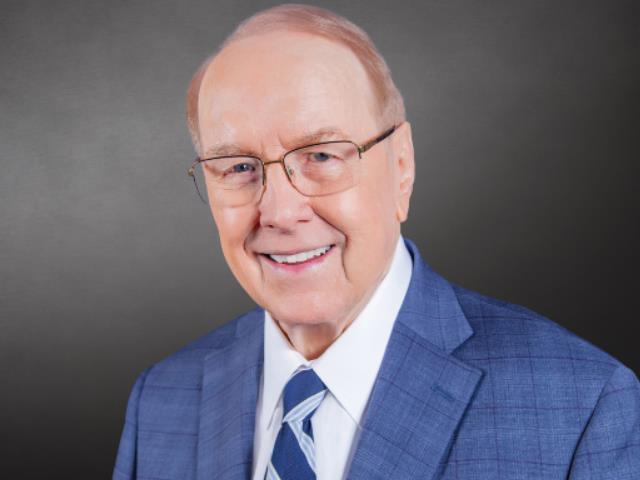
Faith can grow stagnant when life settles into routine. On today’s edition of Family Talk, award-winning actress and author Jen Lilley offers listeners a path out of complacency and into bold, courageous faith. Drawing from her own testimony of finding freedom and renewal, she shares how surrendering control to God opens the door to lasting peace.
Dr. James Dobson: Hello everyone, you're listening to Family Talk, the radio broadcasting ministry of the James Dobson Family Institute. I'm Dr. James Dobson, and thank you for joining us for this program.
Roger Marsh: As Christians, we know that the goodness of God is all around us. He meets us on the mountaintop, he guides us through the valley. The Lord performs miracle after miracle and shows up in our lives at just the right moment. But as time goes on, our faith can sometimes become stagnant, and we can grow a little bit complacent, just going through the motions. Well, on today's edition of Dr. James Dobson's Family Talk, our guest of the program is Jen Lilley. Jen is a very, very gifted author. She's an actress. She's an artist. She's an advocate too, because she's a parent and the mother of four. She has written a brand new resource to encourage readers to leave behind complacency and to pursue bold, courageous faith in Christ instead. Before we dive in a little bit, let me introduce Jen Lilley to you as our Family Talk listening audience. Award-winning actress, as I mentioned, singer and producer as well as philanthropist. You have seen her in various movies on the Hallmark Channel, Great American Family Channel. She will portray Gloria Stuart in the upcoming biopic called Jimmy, and we all know who that's about. That's set for release later this year. But most of all, Jen Lilley has a deep passion for the Lord and his word and growing deeper with him every day. She just released a devotional not too long ago called Wake Up Your Faith: 365 Daily Encounters with Jesus, and that will be the topic of a lot of our conversation for today. Jen Lilley, welcome to Dr. James Dobson's Family Talk. We're so grateful to have you on the program. And especially, I know Dr. Dobson would have loved to just give you a hug and say, "Jen, I'm so proud of you for the work that you're doing." So welcome to our broadcast today.
Jen Lilley: Thank you so much for having me on. It's just very humbling to be on the show. Of course, I grew up listening to Dr. Dobson, and I'm so honored to be here.
Roger Marsh: That's really moving for you. He had that impact on people. And I know that when we were younger, I was in college when my mom and dad introduced me to Dr. Dobson. My mom was a public school teacher, and she taught at a local elementary school where they brought in his film series. She said, "You really ought to come by and see it." And I remember driving by the school on a weeknight. They were showing it in the school library, and I couldn't get in because it was packed. There were people streaming out into the hallways, and I thought, who is this James Dobson guy? But the more I grew in my faith, the more I began to realize my parents are listening to him and reading his books, and they are basically doctor's parenting me too. So from generation to generation to generation, the model is just so huge, Jen. To see where God's taken you, but to know that Dr. Dobson played a part in that, it's very gratifying for us.
Jen Lilley: Listen, not just on the radio. I actually also had to listen to all of his adolescence tapes about we had to have the adult talk. My parents subjected me to three days of that with my mom. I grew up in a great house. My parents are still married, and that's never lost on me what a gift that is. They've celebrated over 40 years of marriage, and I'm just so grateful. So I had a healthy childhood. I say that as a child advocate because I know that there are so many children who do not have healthy households. So if it was a healthy household, I had a typical healthy household. Two parents, great neighborhood. I had a really idyllic childhood for the most part. I grew up Catholic till the age of nine. Not that Catholics are not Christian, but I remember specifically being a young child and being very analytical and just not believing in the Lord. I remember my parents prayed every night. I went to Catholic school. I knew all about Jesus and his 12 disciples and Moses, but I just wasn't sure about it. When I was nine, my parents visited an Episcopalian church for various reasons. They had to church shop. It's so amazing to me because as a nine-year-old, and I hope this encourages anybody who teaches Sunday school because our Sunday school teachers, they miss out on the service, but I want them to know that the impact that they have on kids is so profound. My entire life changed because of one Sunday school lesson. I visited an Episcopalian church and went back to the Sunday school class, and they taught on Elijah and the widow with the oil and the flour. Now, that's a really amazing story found in First Kings, but it's not the coolest story of Elijah. If people are familiar with Elijah, he also called down fire from heaven. He prayed so vigilantly that the Lord sent a drought to where he lived. Anyway, I hear this story of Elijah and the widow where they have just enough flour and just enough oil every day to survive this famine that Elijah has taken part in calling down. I remember being nine years old, sitting in that Sunday school class and being completely bewildered and befuddled because I was like, "Hang on a second. I know Jesus and his 12 disciples can do miracles, and I know there's a guy named Moses who had a staff and did some crazy miracles through the power of God. Who is this guy in First Kings?" So what happened was I ended up going home, pulling out my First Communion Bible, which is a New King James Version Bible, which is not an easy read, especially for a nine-year-old. I remember reading the story of Elijah. Of course, as I get to Elijah and the 300 prophets of Baal when he does call down fire, and I'm like, "What? What else does this book say?" I ended up taking a yellow Crayola crayon because I'm nine and sneaking down into my parents' basement. That summer from turning nine to 10, I read the entire Bible cover to cover. I mean, I'm talking like I would read it like eight hours a day. I have distinct memories of one of my neighbors, Erin Tanner. She was like, "Do you want to ride bikes?" and I said, "I can't, I'm in Leviticus." So I really fell in love with the Lord the summer that I turned 10. Turning nine to 10, I was really on fire for the Lord ever since then. I garnered the nickname that people thought they were hating me, but Jesus says, "If you're persecuted for my name's sake, consider it an honor," and I really took that seriously. I was called Jen for Jesus by my entire fourth-grade class, fifth-grade class. I mean, I just was an evangelist from that get-go. Then in high school, I experienced a lot of church drama. To be clear, the church is actually the body of Christ. The body of Christ did not hurt me. A couple of individuals did, but the hurt was really deep. They attended a different church than the one I got saved in. But after years of a lot of deep-seated torment, my family left the church. I mean, the whole church split. It was that nasty church drama that a lot of people have experienced. At the same time, I want the listeners to know and I want you to know that Jesus was not the one who hurt me. I knew that throughout the entire church hurt experience. I think that's what makes church hurt so hard, and I write about it in my devotional. Church hurt hurts the deepest because there's a knowing of you should know better. If you really love Jesus, how could you do this? Versus when the world hurts you, it's much easier to view them through a lens of heaven because you're like, "You know what, they're lost. They don't know Jesus. They don't have the Holy Spirit." So I walked away from the church for a while and tried church again in college. I was like, "All right, I'm distanced enough." And then my Bible study leader in college sexually assaulted me. So I left the church again. But I could never outrun Jesus because my parents prayed. I did, again, I loved the Bible. I loved Jesus so much. I led so many people to the Lord, but I just was like, "I don't know where to go from here, Lord." And started dating my now husband and really dove back into the word, my relationship with the Lord deepened, and then I found acting.
Roger Marsh: Jen Lilley is our guest today here on Dr. James Dobson's Family Talk, and we're getting into a conversation about why she's written this new devotional called Wake Up Your Faith: 365 Daily Encounters with Jesus, a Journey of Spiritual Renewal and Divine Purpose, which we've got linked up at drjamesdobson.org. The reason I find that so interesting is that you had this passion for faith first. What fourth grader wants to read Leviticus or the whole Bible through? Or Elijah? That was you. But then to go through church hurt the way you described it, which is people at the church who were hurting other people, not the church itself hurting you. And then to go through the assault that you went through, but in the middle of all that, God leads you into something that is really unpredictable, highly artistic. Having grown up as a theater kid myself because of my dad's work and everything, I know that this is not something usually by the time of life where you're having the experience that you did, you're thinking, "I want to be a school teacher, I want to be an accountant, I want to have something that's got some tangibility." And you're going into the great wide open. What was it about acting, drama, that type of thing that you felt God leading you to?
Jen Lilley: I don't fully know. It's kind of multifaceted. I remember I was stage-fright growing up, so I didn't do theater. I tried it, but it was stage fright and kind of just was like, "This isn't for me." But I always loved storytelling and I love people so much. I think that's what made church hurt hard was I couldn't understand. I couldn't understand the behavior. I couldn't understand how we could follow the Bible and go to your brother if they've offended you, then bring a friend, following all that and still just stonewalling. Why is this not getting better? Why can we not get to the bottom of these problems? So I basically went to an open call audition for an independent film and I got on set and I realized that I wasn't afraid of the camera. I absolutely loved everybody that was involved. I felt that the hair and makeup person and whoever was doing costumes, the director, the gaffers who do the lighting, the editors, everybody that was on set was very intelligent, loved storytelling, was very hardworking. Films and television, it's really not easy. People think it's really glamorous, but it's a profession where you get rejected for a living. You have no consistency. You have to really be the top of your game in order to make it no matter what field you're in, whether it's hair and makeup, you have to be the best of the best. It's just very intricate. These people were very smart and hardworking and they loved storytelling and I really realized that none of them are watching me. So I didn't have performance anxiety about it. The camera just felt kind of like a friend. So I started praying about it and I really felt the Holy Spirit. When I say I hear the Holy Spirit, if anybody's listening and they don't know the Holy Spirit yet, God can speak in various ways. We see that through the Bible. The Bible should always be the lens in which you view everything and verify everything. It should be our plumb line. God speaks many ways. He can speak through dreams. He can speak with an audible voice like he did to Samuel. However, when I say that I'm hearing from the Holy Spirit, it's probably what people most commonly refer to, which is almost like this voice in your head like when we have thoughts. So it's not like a booming voice, but it's outside of your normal thoughts. Now you can have this, I want to clarify really quick. You can have three different kinds of thoughts. You can have thoughts that are your own that come from your own flesh and that are just your own thoughts. You need to take those captive and make them obedient to Christ is what the Bible says. You can have thoughts from the Holy Spirit which can seem very counterintuitive. In First John, it says that you need to test the spirits because Satan himself comes as an angel of light. So sometimes things that can sound good are not actually God, which is why you need to know scripture because you need to run it through a discerning test and figure out, "Is this actually the Holy Spirit?" And then there's also the enemy, the adversary, Satan, the demonic. They can also plant thoughts and again, you have to take those thoughts captive. You have to make them obedient to the Lord and understand that you were created on purpose and for a purpose for this exact moment in time. So when I say I hear the Holy Spirit, I mean it's a thought that I had that was so outside of myself that then I can pray into and that voice will continue talking to me and it is not me talking. So the Holy Spirit told me that he was calling me into acting. So I started studying everything there was to know about film acting because I knew I didn't want to do theater because I love to watch it, but it's terrifying to me. So I studied film acting and called up my husband, who was then my boyfriend, and said, "Hey, we've only been dating so long. We were friends for so many years. I really feel the Holy Spirit wants me to go into acting, so I think I'm going to move to LA after college because we were from Virginia and West Virginia respectively." And I said, "So if you don't want to move to LA, I totally understand that. Maybe we should break up now because before we get in too deep." Because when you date like two Christians dating, you are dating with the intention of possibly getting married. And so I was like, "I would rather just break up now and try to see if we can regain our friendship and not make it so awkward." And my husband was like, "Well, if it was really the Lord and we're supposed to be together, then we'll do that." So we moved to LA. I worked really, really hard. I don't want to make it sound like it was easy. It's a career of rejection.
Roger Marsh: Is he in the industry too?
Jen Lilley: No, he's sane. He's the grounding in the family there. He is, oh, absolutely. I always describe my husband's like to drive a car you have the gas pedal and you have the brake. That's what makes a good couple is to be balanced. He's the emergency brake and I'm pedal to the metal at all times. So I'm not easily bridled. The man is a saint.
Roger Marsh: I love that. That's great. So you guys took this huge leap of faith not only for your career but also for your family and your relationship as well. That seems to be a recurring theme for you, Jen Lilley. I think what I realized was reading through your book, Wake Up Your Faith, is not something that you set out to say, "Okay, now it's time for me to do a devotional." Can you help us understand what the process was for doing this? Because you're doing these Hallmark and Great American Family movies and you're really engaged in so many different causes, purposeful activities. And then all of a sudden, here comes a devotional. What was the impetus for that?
Jen Lilley: Before I tell you the impetus for that, I will say that while all this was going on, kind of starting with the church hurt, I also suffered from a 15-year eating disorder. Yeah, I was bulimic for 15 years. I was trying on anorexia for maybe two years. That was not a good fit for me. And I just thought I would never get out of that prison. And the Lord set me free from that, and that's something we can for sure talk about. I'm really open to talking about it. When he set me free from that, and I wanted to be free from the get-go, I just couldn't. Addiction is a really interesting thing. Sin is a really interesting thing because it's fun for a season. And the Bible talks all about that. It's fun for a season, but it very quickly gets a grip on you. When you're in a pattern of addiction, no matter what it is, there's just as much addiction to pornography in the church as there is outside of the church, for example. People feel like they can never get out of it. And I started listening to a lot of John Bevere. I love John Bevere. He started talking about how he had struggled with a pornography addiction early on in his marriage to Lisa, and he's very transparent about it. He said, "People would tell me, just throw away your dirty magazines, throw away your tapes, John." And he was like, "You don't understand, it's here. It's in my mind. I can play these things at any time." When he said that, I thought the same way about bulimia. People would be like, "Well, just stop throwing up," and it's like, "It's not that easy, actually, because I have to eat to live. My body does not know how to digest food anymore." And there also, I have had many things in my life where I have felt completely out of control. And then I chose a profession or the Holy Spirit led me into a profession where I have zero control. People give actors so much more control than they think we have. We are at everybody else's mercy. This is a career where you're going to get rejected 99.9% of times, and you still have to keep trying, try your best, do things with excellence unto the Lord, and keep going. But you got to know you're being rejected. And so I was set free because I listened to John Bevere, and I started thinking, "Man, if John feels like he couldn't get out of it and he did, and the Lord renewed his mind, then maybe, just maybe I could get out of it." And then I was sitting in this church service, and my pastor, he said, "The best definition I can come up with for sin is trusting in anything more than you trust in God." Right? And that's actually Romans 14:23. The Bible actually says that. It's the last sentence of Romans 14:23. It says, "Anything that is not based on trust or anything that is not preceded by trust is sin." So in more simple layman's terms, again, the best definition of sin is trusting in anything more than you trust in God. When I heard that, because I loved the Lord so much, but every time I would go to somebody and say, "I have an eating disorder," my husband did not know. They would either reject me and walk away, have a terrible reaction, abandon me completely. Say, "How can you be a Christian?" The worst response. Or they would give me the excuse of grace. "Jesus' blood covers that." Yes, Jesus' blood does cover that if I repent. But it actually says in the Bible in Hebrews specifically that if I keep on sinning, I actually nullify the sacrifice of Jesus. I continually crucify him. I put him on the cross daily. And what I was not realizing until Jake Sweetman at Cathedral Church LA said, "The best definition of sin is trusting in anything more than you trust in God." All of a sudden, it was literally like I saw like a daydream, this prison cell that I had been sitting in for 15 years. I wanted to get out of it. I went up for every altar call, but I wanted the Lord to give me a quick fix because God does still heal. There are many testimonies of addicts being sobered immediately and the desire for their drug or alcohol, whatever their addiction is, goes away forever when the Holy Spirit moves. I believe God can do that. God did not do that with me, and I think that's because in his kindness and in his parenting, he knew that this was something that I had to walk out. So here I am, I'm sitting in a church. "The best definition of sin is trusting in anything more than you trust in God." I am zealous for the Lord. I have been zealous for the Lord since I was nine, which is what's so confusing about the 15-year eating disorder. I knew my worth. But I also felt like I needed control. I felt like I couldn't get out of it. There was no hope for me. I realized in that moment, "Here's all the lies I'm believing. I'm believing that God can heal other people, but he won't heal me. So he won't heal my metabolism. And I've wrecked my metabolism so there is no going back body image-wise." That's a lie. The Lord made our bodies so good. We have to put in the work to discipline our bodies to eat well, because I was definitely not eating well as a bulimic. I was a glutton. I was a glutton and a bulimic. That's what I was. I was trusting that by being skinny I could provide for myself, stay skinny, be an actor, whatever. It's a control issue. I was not handing over control to the Lord, and my stomach and food was actually an idol because it was what I sought for comfort and control instead of casting my anxieties on the Lord, trusting that he could heal me.
Roger Marsh: This is a key point because there are parents who are listening to us right now who are concerned their kids might wander down this road, or maybe mom and dad are dealing with this. How long had you and Jason been married before you had that come to Jesus moment where you had to say, "You know what, sweetheart, I have an eating disorder," because he didn't know and you were hiding it apparently so very, very well.
Jen Lilley: I will say my parents again, my parents were great parents, they did their best. I have four kids, parenting seems impossible. So I do not put any fault on my parents. They did the very best that they could and how can you ever know? Hindsight is 20/20. But for parents that are listening, if you're concerned that your daughter and even boys suffer with eating disorders. Part of what drove me into bulimia was my parents knew I was struggling with anorexia. So when I was trying to get better, I asked them for healthy food. I was like, "I really want vegetables and grilled chicken," because mentally I needed to know that the calories I were putting in was healthy high-quality calories. It helped my mental struggle. The eating disorder was also brought on because I had all these issues. I had to be put on hormone therapy as a kid. I was packing on weight because of a medication. So I'm freaking out and just trying to control it. When I wanted to just have grilled chicken and vegetables, my parents took that as a red flag to "She's suffering with an eating disorder again." And so they would not feed me healthy food. They were like, "Just get over it, eat what we're eating, you eat with the family." So that's kind of how I got driven into bulimia because they weren't making healthy foods at home to kind of help me deal with the anxiety I was dealing with. Well, Jen Lilley has been our guest today here on Dr. James Dobson's Family Talk. We're just scratching the surface on her fascinating testimony and conversation about her new devotional book, Wake Up Your Faith: 365 Daily Encounters with Jesus, a Journey of Spiritual Renewal and Divine Purpose, which is up at drjamesdobson.org. Jen, can you come back again next time we can continue this conversation?
Jen Lilley: Oh absolutely, anytime.
Roger Marsh: Well, what an honest and encouraging conversation today here on Dr. James Dobson's Family Talk. My guest has been actress, author, and mother, Jen Lilley. Her testimony reminds us that the Lord doesn't waste a single season of our lives, even the painful ones, and he never looks away from us when we are struggling. Amen to that. If you'd like to learn more about Jen Lilley's new devotional, it's called Wake Up Your Faith: 365 Daily Encounters with Jesus. You'll find it linked at jdfi.org. Be sure to join us again next time because Jen has so much more to share of her story. We've also got the audio for part one of this conversation linked there as well. You know, conversations like the one you heard today are made possible because listeners like you support the mission of the Dr. James Dobson Family Institute. And right now your support can go twice as far. Thanks to some generous friends of the ministry, we have a special July matching grant in effect. In honor of America's 250th anniversary, it's a $250,000 match. That means that every gift you give to JDFI will be matched dollar for dollar up until we reach the deadline or July 31st, whichever comes first. As a listener-supported ministry, we rely on friends just like you to keep these conversations on the air. So we invite you to take advantage of this opportunity to double your impact for families all across the country. You can make a secure donation at drjamesdobson.org. If it's easier, just go to jdfi.org; they are one and the same. You can also speak with a member of our constituent care team. That number is 877-732-6825. That's 877-732-6825. Or you can write to us. Our ministry mailing address is The Dr. James Dobson Family Institute, P.O. Box 39000, Colorado Springs, Colorado, the zip code 80949. Once again, our ministry mailing address is The Dr. James Dobson Family Institute, or just use those initials, JDFI, for short, P.O. Box 39000, Colorado Springs, Colorado 80949. Well, I'm Roger Marsh, and on behalf of all of us here at Family Talk and the Dr. James Dobson Family Institute, thanks so much for listening today. Be sure to join us again next time right here as I'll continue my conversation with Jen Lilley about 365 ways to wake up your faith. That's coming right here on the next edition of Dr. James Dobson's Family Talk, the voice you trust for the family you love.
Related Episodes
Wake Up Your Faith, Part 2
Thursday, July 9
Living the Good Life, Part 2
Tuesday, July 7
Living the Good Life, Part 1
Monday, July 6
Related Videos


About Family Talk
Family Talk is a Christian non-profit organization located in Colorado Springs, Colorado. Founded in 2010 by Dr. James Dobson, the ministry promotes and teaches biblical principles that support marriage, family, and child-development. Since its inception, Family Talk has served millions of families with broadcasts, monthly newsletters, feature articles, videos, blogs, books and other resources available on demand via its website, mobile apps, and social media platforms.
The Dr. James Dobson Family Institute (JDFI) is a Christian non-profit ministry located in Colorado Springs, Colorado. Founded initially as Family Talk in 2010 by Dr. James Dobson, the organization promotes and teaches biblical principles that support marriage, family, and child development. Since its inception, Family Talk has served families with broadcasts, monthly newsletters, feature articles, videos, blogs, books, and other resources available on demand via their website, mobile apps, and social media platforms. In 2017, the ministry rebranded under JDFI to expand its four core ministry divisions consisting of the Family Talk radio broadcast, the Dobson Policy and Education Centers, and the Dobson Digital Library.
Dr. Dobson's flagship broadcast called, “Dr. James Dobson’s Family Talk," is aired on more than 1,500 terrestrial radio outlets and numerous digital channels that reach millions each month.
About Dr. James Dobson
Dr. James Dobson is the Founder Chairman of the James Dobson Family Institute, a nonprofit organization that produces his radio program, “Dr. James Dobson's Family Talk.” He has an earned Ph.D. from the University of Southern California and holds 18 honorary doctoral degrees. He is the author of more than 70 books dedicated to the preservation of the family including, The New Dare to Discipline, Love for a Lifetime, Life on the Edge, Love Must Be Tough, The New Strong-Willed Child, When God Doesn't Make Sense, Bringing Up Boys, Bringing Up Girls, and, most recently, Your Legacy: The Greatest Gift. Dr. Dobson served as an associate clinical professor of pediatrics at the University of Southern California School of Medicine for 14 years and on the attending staff of Children’s Hospital of Los Angeles for 17 years in the divisions of Child Development and Medical Genetics. He has advised five U.S. presidents and served on eight national commissions. Dr. Dobson has been married to Shirley for 64 years, and they have two grown children, Danae and Ryan, and two grandchildren.
Contact Family Talk with Dr. James Dobson
540 Elkton Drive
Suite 201
Colorado Springs, CO 80907
Phone Number
877.732.6825


