The Witness of Faith
Ministries > Leading The Way with Dr. Michael Youssef
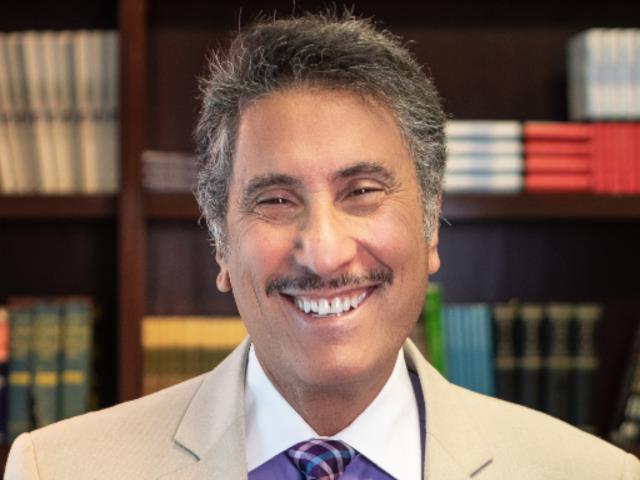
You’re invited to listen the next Leading The Way when Dr. Michael Youssef continues his series, They Were Just Like Us . . . with a look at Abraham!
References
Guest (Male): Abraham had seasons of overwhelming dark and faithless times. But he emerged as a shining example of deep and living faith. Here's Dr. Michael Youssef.
Dr. Michael Youssef: If you study the life of Abraham, you will know and you will discover that there was a progress. There were other things happening in his life before he could come to the point and say by faith, Abraham was ready to offer God his dearest and nearest. There were things that were happening in his life before he was called the friend of God, and we need to know them in order to be encouraged.
Guest (Male): Welcome to Leading the Way with international Bible teacher and the author of more than 50 faith-inspired books, Dr. Michael Youssef. Throughout the pages of the Bible, we read stories of people being used by God to accomplish great and mighty things. Some accounts highlight victories. Other accounts, failures. Through both triumph and disappointment, God uses people, people just like us, to reveal and to fulfill God's plan for redemption. So up next on Leading the Way audio, Dr. Youssef continues his faith-challenging teaching series called, They Were Just Like Us, with a look at Abraham. Let's listen together.
Dr. Michael Youssef: When I was a young Christian, I used to love going to Christian conventions. And in Christian conventions, you always get testimonies. They all talked about their triumphs and their victories. I began to think, "Well, this is wonderful. I think this is great. We all need to hear about the power of God working in the lives of others. We all need to be encouraged to hear the power of faith working in the lives of others. I think we all need to be motivated and lifted up and encouraged to know that God wants us to be victorious, that God wants us to be more than conquerors through Christ, that God wants us to be daily marching in His victory parade as Paul puts it." But my personal problem was, hearing all this victory and only victory, I began to wonder, "What's wrong with me when I'm experiencing failure? What's wrong with me when I'm experiencing defeat? What's wrong with me when I'm experiencing downtime? What's wrong with me when I'm discouraged?" Obviously, I will never be like these great giants, and I would get so discouraged. And that is why, when I entered the ministry, I made a promise to the Lord and a promise to myself that I will not only give God the glory for all the victories that He gives me, but I will not hide my failures and fake success. I'll be real. And that is why this series of messages from Hebrews chapter 11, They Were Just Like Us. The whole reason why I named it, They Were Just Like Us, is so that we don't stand there in helplessness and say, "Man, these were great giants for God. I can never do this." No. This whole series was designed to encourage us and to lift us up. It's designed to motivate us to be about God's call upon our lives to reconcile the world to Him, to be ambassadors of the King of kings, and to be witnesses for our salvation, and to be salt and light to a world that is rotting and dark. And so in Hebrews chapter 11, verse 8, says by faith, Abraham. If you study the life of Abraham, you will know and you will discover that there was a progress. There were other things happening in his life before he could come to the point and say by faith, Abraham was ready to offer God his dearest and nearest. There were things that were happening in his life before he was called the friend of God, and we need to know them in order to be encouraged and be lifted up. How he progressed in walking from one point of glory to another is very important. Why? Because we cannot get to the point of his life of willingness to trust God with everything that God gave him, with the most precious possession that he has, with his treasured object of his love, his most revered affection, his most loved item. See, for Abraham to get to that point, you must understand that his life was not failure-free, that his life was not free from setbacks, that his life was not free of detours, and that he did experience a whole lot of discouragement along the way. But the point is not the setbacks and the failures and the detours and the weaknesses and the discouragement. That's not the point. The point is, what did he do with these setbacks? What did he do with these failures? What did he do with these weaknesses? What did he do with this discouragement? And so I want you to turn today to Genesis chapter 12, beginning at verse 1. What God is saying there, if you look at it, He says, "Abraham, leave home and family and go to Canaan." He was in Ur of Chaldees, Southern Iraq. But the summary verse is in 11:31. You know, the Bible gives us a summary verse, then we go unpack the story. In the beginning, God created heavens and earth, and then He goes in to give us the story of creation, unpacks that one summary verse. Look at verse 31 of chapter 11 of the book of Genesis. There you find that Terah, that's Abraham's father, and Sarah, Abraham's wife, and Lot, that's Abraham's nephew, got together and it looks like the father is the one, Abraham's father is the one who's saying, "Let's go." And he led them. That's just a nice Middle East way of saying the patriarch, the old man in the family, is the one who led the way. But it was God who spoke to Abraham. Now listen to me very carefully. For Abraham to take his father Terah with him when he's leaving Ur to Canaan is like you taking your mother to your honeymoon. Did you get that? I know it's rough, but it's unthinkable and I'm going to show you why. Now knowing the Middle East culture like I do, I can imagine what the old man did. I can only imagine his father Terah looked at him and he said, "What is this? You leaving me behind? What are you doing? Where are you going? You're going to leave your poor old pop behind? You deserting your poor old father after all that he's done for you?" Guilt, guilt, guilt. I tell you. "Who's going to take care of me in my old age? Your brother Nahor, he's a scatterbrain. He can't take care of me. You're going nowhere without me, boy." Now parents of adult children, let me just have a word with you for a second. Give your adult children space. You've got to give your adult children room to grow, room to succeed, room to fail as they walk with Christ. Room to be themselves in life. You've got to help them leave and cleave. And God wanted Abraham to break away from his father's idols and idol worshiping. He wanted Abraham to get away from his pre-God life. But that's not all. Look again, verse 31 of 11. They were journeying from Ur to Canaan. There was only one route to go from one place to the other. And Abraham doing this in obedience to what God told him. But to go from Ur of Chaldees, some people call it Ur, either way, to go from Ur to Canaan, you have to go through Las Vegas. And here's the problem. What happens in Las Vegas stays in Las Vegas. That's where they stayed. Of course, the Bible doesn't call it Las Vegas, it calls it Haran. And Abraham's father gets to Haran and he loves the carnival atmosphere of that city. And he says, "Let's just stay here, my boy. This is great." Wait a minute. God said Canaan, not Haran. Now, I told you Abraham's obedience was not without its detour. Beloved, listen to me. When you begin your walk with God, when Jesus Christ becomes the Savior of your soul and the Lord of your life, every one of us who began a walk with God, we leave our Ur, whatever your Ur is. Your past life without Christ. You leave it and you get out and you move on and you progress in your walk toward Christlikeness. Theologians give it a big word, call it sanctification. But it is a process of growing toward Christ. So if you've been a believer for a number of years and you're not growing, begin to worry. And so Abraham was progressing not only physically, but he was progressing spiritually toward full obedience. And most of us, as we begin our walk with Christ, sooner or later we're going to run into our Harans. And your Haran and my Haran may be different. And the place of temptation and detour for you is different from mine. But the thing is, we're all going to be tempted with Harans in our lives. And for Abraham, that's understandable because he has to go through Haran. He couldn't avoid Haran. And I often say it's okay to refuel in Haran, it's okay to grab a fast food from a fast-food restaurant at Haran, but don't stay in Haran. Don't dwell there. It's one thing to look and it's another thing to go around the block to come back for a second look. Haran was the site of the great temple honoring the moon god. And Terah got there and man, he thought he died and went to heaven. I mean, this is idol worship of idol worship. I mean, old Terah came in front of this Caesar's Palace and he wouldn't move. He wanted to check in. And he said, "Son, I'm imagining this, okay? Don't look for it in the Bible. I know God said to you, Canaan. I know God told you to go there because it's the Promised Land. But we've come so far. Let's just stay here. It's just as good as Canaan. One place is as good as the other. What difference does it make?" Now believing friend, listen to me. I know of what I'm talking about. How many times did you find yourself, whether it's because of a coworker or because of a friend, even a family member, a neighbor, a partner in business, how many times because of somebody else whom you are supposed to influence for Christ, that you find yourself being influenced by them? How many times have you found yourself compromising your convictions, selling your birthright, and refused to walk by faith and continue to live by sight, and you decide to settle for something that is far short than the plan of God for your life? How many times that a person, no matter how near or dear to us, tempted you to be contented in partial obedience to the word of God? And Abraham should have said, "Father, God said Canaan and Haran won't do." Beloved, don't settle for Haran, whatever it may be for you. Don't settle for that. No matter who is tempting you to stay there, don't let fear keep you from going all the way to Canaan. Don't let fatigue stop you from moving all the way to perfect obedience. Don't let outward attraction of the valley keep you from going into the mountaintop. Abraham was a man of faith, but he was just like us. He was just like us. But really, when you think about it, he didn't have preachers, he didn't have pastors, he didn't have fellow Christians and small groups and fellowships and Bibles and books by the truckload and television programs and radio programs, and I'm all for that. So you understand in context, he didn't have any of this. He just heard the voice of God. And so take things and balance them. He was just like us. He was tempted to abort the plan of God for his life. He was tempted to settle for second best. He was tempted to give in to the detractors in his life, even if it was his father. You know, so many believers are praying for revival and I rejoice in that. So many people praying for a genuine Holy Spirit revival to come upon our nation and I agree with that prayer. I totally agree with that prayer. But please listen to me. Revival will not come to God's people who are living in partial obedience. Revival will not come to Christians who have settled in their Harans and refusing to go on with God to Canaan. And so God had to come to Abraham again, 12:1, 2, and 3 and says, "Move on to My plan for your blessing. Move on for My plan of effectiveness." Because down the road in that same chapter, He says, "In you all the families of the earth shall bless themselves." How? They're going to come to believe in the God of Abraham and they're going to be blessed. And God says, "Move on to My plan of effectiveness for you. Move on in My plan of being an ambassador of the King of kings." Oh, but that's not all. When Abraham and his family finally get to Canaan, God appears to him again, verse 7 of chapter 12, the book of Genesis. He said, "This is the place that I'm going to give you. This is the Promised Land. This is the land for your descendants." Ah, but as soon as Abraham faced his first problem, as soon as he faced his first challenge, as soon as he faced his first difficulty, he took things into his own hands and went down to Egypt. I want to say something else before I explain this. The fact that you are at the center of the will of God does not mean that you will not face challenges. It does not mean that you will not face difficulties. It does not mean that you're not going to face temptations. It does not mean that you're not going to face horrendous discouragement. But don't sit in that discouragement. Don't allow discouragement to render you ineffective. But to his credit, Abraham, as the book of Hebrews tells us, lived in a tent but built a stone altar. Both are an indication of an act of faith in God. To his credit. But nonetheless, Abraham runs to Egypt. He goes in there and he lies to Pharaoh about Sarah. Oh, and in our postmodern culture, we wouldn't call it a lie, really. It's sort of a partial lie, it's kind of a white lie, isn't it? It's sort of a half-lie, not quite a lie. Because Sarah, after all, was a half-sister. So he said to Pharaoh, "Sarah is my sister." He really didn't quite lie big time, but God thought he did. See, in the Old Testament, going to Egypt is a symbol of living in the flesh. In the Old Testament, going to Egypt is the place we go to when you're running away from the Lord. Egypt was the symbol of worldly wisdom. Egypt was a symbol of being shackled by the chains of the world. And the first thing that happens when you run away from the will of God, the first thing that's going to happen to you is that you're going to be overwhelmed with fear. If fear is possessing you now, you need to ask yourself the question, "Am I at the very center of the will of God?" And that's what happened to Abraham. He became a fearful man when he got to Egypt. All he can think of is the life and the well-being and the welfare of his wife's husband. That's overwhelmed him. Why? Because Pharaoh, when he saw a woman that he wanted to add to his harem, he would kill the husband. And Abraham panicked. Have you ever wondered what really went on in the mind of Abraham at that time? I mean, he really, I know God promised to bless me. I know that He told me that. And He promised to give me descendants like the sand of the sea. I know God did all this. Oh my goodness, but if Pharaoh kills me, all of that's over. You see, he hadn't got to know God yet. He hadn't got to know God as you've got to know God. Abraham had not learned fully now to trust in God completely, as we will see in the next message. He did later on. But please hear me right on this one. The tragedy that I see among believers across this land, those who have been walking with God for years, those who have experienced God's faithfulness for years, those who have experienced God's protection many a time, those who have experienced the hand of God numerous times, those who have experienced the provision of God many times, those who have experienced the deliverance of God numerous times, those who have experienced the goodness of God and the mercy of God, those who have experienced the blessings of God. And yet, instead of going on to solid food, they go back to milk. It's a tragedy. And they still don't trust God with whatever it is precious to them. In Genesis 16 and 17, Abraham falls in that scheme of Sarah's having a son by her maiden, Hagar, and Ishmael was born. But that's not all. In Genesis 20 and 21, Abraham lied again to Abimelech. The same chapter and the same verse. And then he gets rebuked by a pagan. And yet again. Why? Because God wanted to protect the purity and the integrity of Sarah because the Messiah is going to come out of the loins of his descendants. Now you understand why, before I could tell you about the friend of God, by faith Abraham, before I could tell you about the man who had power with God, before I could tell you about the man who fully trusted God, I needed to tell you that it was not all victory all the way. But the question that I want to leave with each one of you. What do you do with discouragement? What do you do with failures? What do you do with setbacks? What do you do with knockdowns? What do you do? The one thing you must never do is sit in your failure or sit in your setback. Here's what you do, three things I'll tell you very quickly and I'm not going to elaborate on them, just the headlines. Number one: Face failure head-on. Don't try to fake success. Face it head-on. Secondly: Learn from your failure. Don't waste your failure. And thirdly: Never, never, never let failure be an excuse for not getting up and trying again. For out of jaw of defeat, God wants to give you victory.
Guest (Male): Challenging words from Dr. Michael Youssef on this episode of Leading the Way audio. You know, today's message, "The Witness of Faith", is just one part of an exciting series. You can stream the series or individual episodes at ltw.org. You can also subscribe to the podcast or check out lots of additional content on the app. The website to begin your journey of connection is ltw.org. You know, when you look around the world and you think over these past couple of years, it's pretty easy to see how joy has been chased out of many lives. Smiles and laughter have been replaced by fear and anxiety. Some by our own doing, but much by leaning into the messaging shouted by the culture. That's why the entire team at Leading the Way is so excited about Dr. Youssef's book. It's called, Empowered by Praise.
Dr. Michael Youssef: Several years ago, I wrote a book that literally came out of the crucible of my own experiences that I was going through at the time, and it literally changed the lives of countless thousands of people around the world. It's called, Empowered by Praise. God taught me how to praise Him in the midst of tough times, and I continue to even use that book now. And you know, you can praise God in the midst of your circumstances today, no matter where you are, and it will give you a great and vibrant walk with the Lord.
Guest (Male): Get your copy of Empowered by Praise from Leading the Way. Now right now, Dr. Youssef is offering to send you a copy when you give a gift of any amount to the worldwide ministry of Leading the Way. So no matter the size of the gift, Empowered by Praise can be on the way to you right now. Get the details. Call 866-626-4356. That's ltw.org and 866-626-4356. And write to us at Leading the Way, Post Office Box 20100, Atlanta, Georgia, 30325. That's Leading the Way, Post Office Box 20100, Atlanta, Georgia, 30325. This program is furnished by Leading the Way with Dr. Michael Youssef.
Related Episodes
The Work of Faith
Thursday, August 20
The Walk of Faith
Wednesday, August 19
The Worship of Faith
Tuesday, August 18
Related Videos
About Leading The Way
Along with partners committed to changing the world, Dr. Michael Youssef is leading the way for people living in spiritual darkness to discover the light of Christ. By passionately proclaiming uncompromising Truth through every available form of media, this international team of experts is uniquely providing hope that is revolutionizing lives around the world.
What began as a small local radio ministry in 1988 has grown into an international ministry reaching millions for Christ, including a vast audience in the Muslim world seeking Truth in closed countries. Dr. Youssef's Biblically-based programs are broadcast in more than 28 languages to audiences across six continents. His books, MY Journal magazine, and daily e-devotionals continue to minister to a global audience. Leading The Way utilizes cutting-edge technology to advance the Gospel. Its solar-powered Navigators are reaching into remote villages, and the ministry's KINGDOM SAT TV channel—launched by Dr. Youssef in 2009—is reaching into the Middle East with programming in English, Arabic, and French. Field Teams follow up with viewers, including those in restricted areas, to lead the lost to Christ, disciple new believers, and support the underground Church.
Dr. Youssef and the Leading The Way team are committed to proclaiming the Good News of Jesus with the lost and equipping believers to grow in Christ. Learn how you can partner with this unique ministry today.
About Dr. Michael Youssef
Michael A. Youssef, Ph.D., is the Founder and President of Leading The Way with Dr. Michael Youssef, a worldwide ministry that leads the way for people living in spiritual darkness to discover the light of Christ through the creative use of media and on-the-ground teams. His Biblically-based teaching programs are broadcast more than 18,000 times per week in multiple languages around the world. He is also the Founding Rector of Church of the Apostles in Atlanta, Georgia, and founder of the AWAKE America prayer movement.
Dr. Youssef was born in Egypt and lived in Lebanon and Australia before coming to the United States. In 1984, he fulfilled a childhood dream of becoming an American citizen. Dr. Youssef holds theological degrees from Moore College and Fuller Theological Seminary and a doctorate in cultural anthropology from Emory University. He has authored more than 50 books, including popular titles Saving Christianity?, Life-Changing Prayers, Is the End Near?, How to Read the Bible, Heaven Awaits, and God’s Final Call. He and his wife reside in Atlanta and have four grown children and 15 grandchildren.
Contact Leading The Way with Dr. Michael Youssef
Mailing Address
Leading The Way
P.O. Box 20100
Telephone:
(404) 841-0100
Toll-free line
(800) 337-5323


