Jesus, Leader Above all Leaders
Ministries > HopeLives365 with Mark Finley

SUBSCRIBE:
Apple Podcasts
Was he just a good teacher, or something more? That’s hardly up for debate, when one knows our Savior, Jesus Christ. Explore ancient predictions written centuries in advance, historical records outside the Bible, and a logical puzzle that still challenges skeptics and believers alike today.
Mark Finley: Bible says that Jesus came forth. The Father says, Son, come forth. The stone is rolled away. The Roman soldiers fall over as dead men. We serve a risen Savior. This Christ reaches out to you today.
Announcer: This is Hope Lives365 with Pastor Mark Finley. Today's message, Jesus, leader above all leaders. Enjoy, and remember you can always catch up with past messages and stay up to date with HopeLives365 and Pastor Mark by going to hopelives365.com, and stay with us for a free Bible study offer later in this program. And now, Pastor Mark Finley.
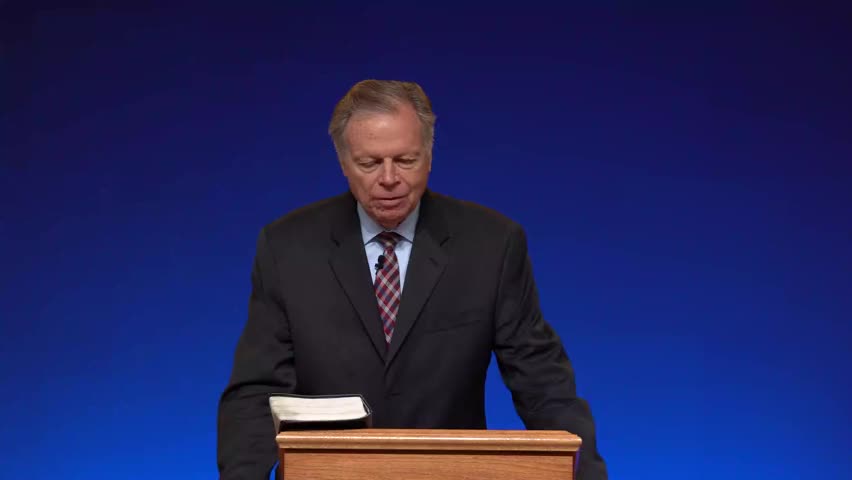
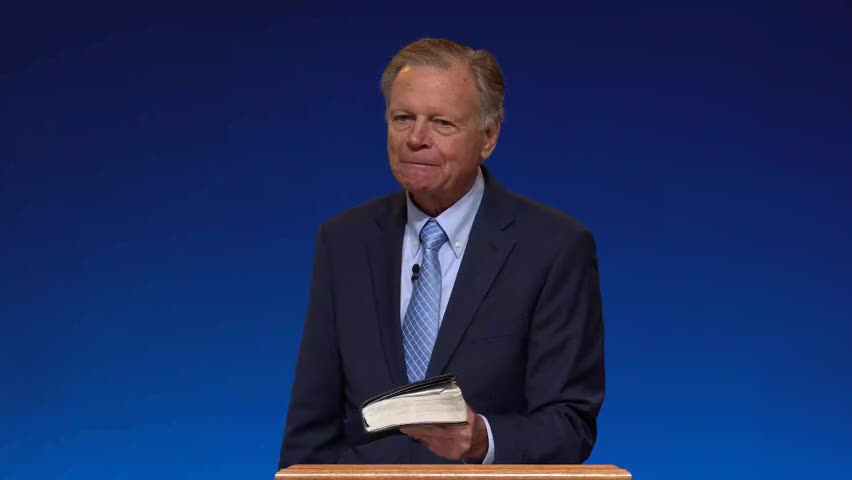
Mark Finley: On the landscape of history, we can identify many great leaders, people who've changed the world. Whether you agree with Confucius or not, he was most definitely a world changer. Whether you agree with Socrates and Plato or not, they were thought leaders whose ideas have made a difference for all of us. Think of Winston Churchill. It was his dogged determination in his speeches before Parliament that preserved Western civilization for democracy. And there was Abraham Lincoln in the United States. Without his vision and courage, America would have been set back many years in the area of human dignity and freedom. Lincoln was a real world changer. All of these, and I could name many more, had a powerful influence on history, but there is another world changer who, far above and beyond any of these, has made a difference in the world and has affected the lives of every single one of us. I'm reminded of an essay called One Solitary Life. He was born in an obscure village, the child of a peasant. He grew up in another village where he worked in a carpenter shop until he was 30. Then for 3 years, he was an itinerant preacher. He never wrote a book. He never held public office. He never had a family or owned a home. He didn't go to college. He never lived in a big city and never traveled more than 200 miles from the place where he was born. He did none of the things that usually accomplish greatness. He had no credentials but himself. He was only 33 when the tide of public opinion turned against him. His friends ran away. One of them denied him. Another one turned him over to his enemies. He went through the mockery of a trial. He was nailed to a cross between two thieves. While he was dying, his executors gambled for his garments, the only property he had on Earth. When he was dead, he was laid in a borrowed grave through the pity of a friend. 20 centuries have come and gone, and today he is the central figure of the human race. I'm well within the mark when I say that all the armies that have ever marched, all the navies that have ever sailed, and all the parliaments that ever sat, all the kinds that have ever, all the kings that have ever reigned, put together, have not affected the life of man on earth as much as this one solitary life, Jesus Christ our Lord. But that leads us to a question. Who was this Jesus? Was he simply a good man? Was he just a moral teacher? Who is this Jesus? There are a lot of people today who agree that Jesus was a good man, even a great man, but nothing more. They'll acknowledge that Jesus lived, that he was a historical figure, but consider him nothing more than an ethical teacher or moral philosopher, and they get busy imagining all sorts of things about his life. Their main thrust is to humanize Jesus, strip him of his divinity. Here is the central issue in this kind of thinking. If Jesus is not divine, then his offer of eternal life is merely idle speculation, and whether one accepts it or not is a matter of human opinion. But if Jesus Christ is divine and his offer of eternal life is real, then to reject that offer is to miss out on eternity. Now, here's a problem that one has if you don't believe that Jesus is divine, if you don't believe he's eternal. How does what you account for what Christ said about himself? Jesus claimed that he was divine. Look at John chapter 8, verse 58. Jesus says, speaking to his Jewish audience, Jesus said to them, most assuredly I say to you, before Abraham was, I am. He equates his existence with the I am, the eternal one, the one who never had a beginning and never had an ending. If you look over, for example, at John chapter 14, Jesus is talking to Philip in John 14, verse 9. Jesus has been asked by Philip in verse 8. Philip has said, show us the Father. And Jesus said, have I been with you so long and yet you have not known me, Philip. He who has seen me has seen the Father. So how can you say, show us the Father? In other words, Jesus is pointing out that he is divine, that he's come from heaven. In fact, if you look at the book of Hebrews, once again, in Hebrews chapter 1, the Father, speaking of the Son, calls, addresses the Son as God. Hebrews chapter 1, it says, starting with verse 6, but when he again brings the firstborn into the world, he says, let all the angels of God worship him. Only God can be worshipped, you see. And then to the Son he says, to the Son, that is the Father speaking, your throne, O God, is forever and ever. So when you look at the New Testament particularly, and also the Old Testament, Jesus is declared to be the divine Son of God, and Christ speaks about that himself. Now, let's suppose that one says, well, Jesus is not the divine Son of God. Then how do I deal with the statements in which he says he is? If he's not the divine Son of God, then he's either what? A liar, because if somebody says something they're not, and they consciously lie, but how can you say Jesus is a liar when you look at the moral claims of Christ, when you look at the miracles that he wrought, I mean, when you look at his teachings, I mean, he is, his teachings are the highest moral ethical teachings possible to the human race. But if he's, you only have one of three choices, really. If somebody says they're something they're not, they're either lying, deluded, or crazy. Are you saying that Jesus is lying? Certainly not. Deluded? Definitely not. Crazy? Certainly not. Think about the way he reasoned. The third, the fourth choice is he's everything that he says he was. Now, the interesting thing when you look at it, you have again and again some of these early church fathers who lived second century. Look what they're saying. Here's Ignatius, 105 AD. He says, speaking of Jesus, God himself was manifest in human form. You look at Clement, he was an early church father. He lived in AD 150. It is fitting that you should think of Jesus Christ as God. Here's Justin Martyr, AD 160, being the first begotten word of God, he is ever God. Tertullian, AD 200, Christ is our God. Origen, AD 225, no one should be offended that the Savior is also God. And here is another one by one of the early church leaders, Novation, 235 AD, he is not only man, but God also. So the early church believed that Christ was God. Why else would they be giving their lives in martyrdom for him if they believe he was just a good man or just an ethical teacher? Is there any evidence, you ask, outside of the Bible that indicates that Christ was more than a good man? Do we have any evidence historically? Well, here is the Jewish historian Josephus. He lived from AD 37 to AD 97. He says, now there was about this time Jesus, a wise man, if it be lawful to call him a man, for he was one who wrought surprising feats. He was the Christ. He appeared to them alive the third day, as the divine prophets had foretold these and 10,000 other wonderful things about him. This is remarkable that you have a Jewish historian, Josephus, talking about Christ and the fact of his divinity. And then you have this enlightening comment from the Roman historian Tacitus, who lived about AD 55 to AD 120. He said, Christos, or Christ, from whom the name Christian has its origin, suffered the extreme penalty, that's death, during the reign of Tiberius at the hands of one of our procurators, Pontius Pilate. There is no doubt about it. The people who lived closest to the time of Jesus confirm the facts in the biblical story, and they acknowledge the details of his life by giving credibility to his divinity. Jesus himself declared, of course, that he was divine, And he says he's the bread of life that came down from heaven. Jesus is remarkable. You remember we mentioned earlier that Jesus said in John 8:58, he said, I am the I am. Did the Jews understand what he meant? They certainly did. The word I am is ego eimi in the Greek language, which is the original language of the New Testament. It means I'm the self-existent one. And look, they understood what he meant because they took up stones to stone him because they believed that he was lying to them. So Christ himself declared again and again and again that he was God. But you know, one of the greatest evidences that I believe is the evidence of prophecy. So let's look at some prophecies. Many biographies begin at the place of a person's birth. So let's go 700 years before Christ and look at Micah chapter 5, verse 2. And here in Micah 5 and verse 2, we read about the birthplace of the Messiah. This line of evidence helps to reveal the truth about who Jesus really was. The prophet Micah says, Bethlehem, in Micah 5, verse 2, written hundreds of years before Christ, Bethlehem, out of you shall come forth to me, the one to be ruler in Israel. This is a really interesting because Jesus' parents were living in Nazareth, which is approximately 90 miles north of Bethlehem. How likely is it that a woman who's pregnant, 9 months pregnant, will take a 90 mile donkey ride and go to another town just before her baby's born? But that's what Mary did, in exact fulfillment of the prophecy given centuries before. The text actually says in Micah 5, verse 2, Bethlehem Ephrata. Now, though thou be little among the thousands of Judah, there were two Bethlehems, one in the north, one in the south. This doesn't name any Bethlehem. It names Bethlehem Ephrata in Judah. It pinpoints hundreds of years in advance the exact city that Christ would be born in, and miracle of all miracles, Mary doesn't have the baby on the way. She's 9 months pregnant, she's bouncing up and down this donkey. She comes to Bethlehem by the decree of Caesar Augustus, the very night that Christ was born. Joseph brought Mary there because all the world would be taxed, and he had to go to his home city. But that's not all.
Announcer: We'll be right back with Pastor Mark Finley. We thank you for listening and hope you're enjoying today's message. Our mission is to attractively present the Christ-centered biblical truths of scripture in a practical, relevant way to people around the world, so that they may experience the abundant life that Christ offers. If you want to learn more about the Bible, check out our free Bible series at globalbibleschool.org. That's globalbibleschool.org. Discover answers to your deepest questions straight from God's word. And now back to Pastor Mark Finley.
Mark Finley: Prophecy after prophecy after prophecy reveals that Christ indeed is the Messiah. Isaiah 7, verse 14 says that a virgin shall conceive and bear a son and shall call his name Emmanuel. So again and again you have these prophecies. A virgin conceives. Now all this was done that it might be fulfilled, which was spoken by the Lord through the prophet, that's Isaiah. Behold, a virgin shall be with child and bear a son and shall call his name Emmanuel, which is God with us. So the exact place of Christ's birth was foretold in scripture. The exact place of his birth being Bethlehem. The virgin birth was foretold in scripture. Christ was not born naturally, he was born supernaturally. The Holy Spirit conceived Jesus in the womb of Mary, and that's why it says a virgin shall conceive and bear a son. Joseph was a good man. He had been engaged to Mary, but he didn't want to make some public spectacle or public example. He was going to just quietly put her away or separate from her, but the angel comes to Joseph as well and says to Joseph, you will take Mary as your wife. And it was actually the angel speaking to Joseph here in Matthew chapter 1 about the virgin conceiving. When you come to the book of Luke, the angel speaks to Mary, and we want to take a look at that as well. We looked at the angel speaking to Joseph, but now let's look at the angel speaking to Mary. And so the angel comes, and Christ's birth is announced to Mary. She's a six-month. Now, in the sixth month, the angel Gabriel, this is Luke chapter 1, verse 26, was sent by God to the city of Galilee to a virgin betrothed to a man whose name was Joseph. We read about it in Matthew 1, we read about it here in Luke 1, and the virgin's name was Mary. And the angel comes, and he says in verse 28, the angel said to her, "Rejoice, highly favored one, the Lord is with you. Blessed are you among women." She's troubled. She doesn't know what's going on here. And, verse 31, behold, you'll conceive in your womb and bring forth a son, call his name Jesus. He'll be great, he will be called the Son of the Highest, and the Lord will give him the throne of his father David, and he'll reign over the house of Jacob forever, in his kingdom there'll be no end. So Mary is just overwhelmed. She's told that the Holy Spirit will come upon her. So in Matthew 1, you have the prediction that a Virgin Mary would bear a son. The angel comes to Joseph. In Luke 1, the angel comes to Mary and tells that a virgin would bear a son. All through the Old Testament, you have these prophecies of the Messiah, amazing prophecies. There was a prophecy in the book of Numbers that wise men would come from the east, and as they came from the east, they would come to the very birthplace of Christ. You know, you find that in the book of Numbers. In the book of Isaiah, you find the very ministry of Christ described. And here in Isaiah, the 61st chapter, again, a prophecy of the very ministry of Christ. Isaiah 61. The Spirit of the Lord is upon me because the Lord has anointed me to preach good tidings to the poor. He has sent me to heal the brokenhearted. This is a prophecy of the Messiah. He would preach good tidings, the good news to those that were poor, those that were living lives in the bondage of sin, the good news of the gospel, the good news of the mercy, the grace, the forgiveness of God. He would heal the brokenhearted. Jesus would come to wipe our tears away. He would come to bring healing to our broken hearts, to proclaim liberty to the captives. He would deliver those who all their lives have been subject to the bondage of sin and greed and lust and guilt. He would open the prison to those that are bound. He would proclaim the acceptable year to the Lord. So, in fact, in Luke chapter 4, Jesus read this very passage in the synagogue on the Sabbath, and as he read this very passage, he declares that he is the fulfillment of this prophecy. He says, this day is fulfilled in your ears. So, throughout the Old Testament, we find these prophecies of the Messiah. There are no greater prophecies of the Messiah, though, than those that surround his death. Did you know that in the Bible, in the book of Zechariah, hundreds of years in advance, it was predicted that Jesus would be sold for 30 pieces of silver? It's very clear in scripture that that's what the Bible predicts. Zechariah chapter 11. Then I said to them, if it's agreeable to you, give me my wages, and if not, refrain. So they weighed out for my wages 30 pieces of silver. And the Lord said to me, throw it to the potter, that princely price they gave to me. So I took the 30 pieces of silver and threw them to the potter in the house of the Lord. Now look, Jesus would be sold not for 25, not for 40, not for 50, but for what? 30 pieces of silver. And the scripture says that he would be betrayed by a friend for this 30 pieces of silver, and that they would throw it to the into the house of the Lord, the blood money would be too hold, too heavy to hold. Judas sold Jesus for 30 pieces of silver. Judas came back, he felt so guilty about it, went back to the temple, threw it on the floor, and the priests used it to buy a potter's field. The New Testament tells us that was exactly what happened. Judas, a friend, betrayed Jesus, not an enemy. Judas betrayed him for 30 pieces of silver, exactly the price. How did the Bible know that Jesus would be betrayed by a friend, not an enemy? How did it know that he'd be betrayed for 30 pieces of silver, the exact price of a slave, hundreds of years in advance? How did the Bible know that Judas would feel so guilty he'd throw the money on the floor of the temple? And how did the Bible know that the priest would take it and buy a potter's field? Because the Bible is not an ordinary book, and Jesus is not an ordinary man. Jesus, the divine Son of God, more than an ethical teacher, more than a religious philosopher. Jesus is the divine Son of God. Throughout the Old Testament, we have prophecy after prophecy after prophecy of Christ's life, Christ's death. Let's go to Psalm 22. Here in Psalm 22, we have a number of prophecies clustered together. See, the evidence of Christ's divinity is the godless life, the godly life that he lived, the godly life that he lived, evidence of his divinity, that he touched the eyes of the blind and they were opened, touched the ears of the deaf and they were unstopped. He touched the arm of the withered man's arm and it was healed. Touched the legs of the lame, and they ran again. His godly life. He told Mary, go and sin no more. Wrote the sins in the sand of the woman caught in adultery. Jesus cast out demons from the demoniacs. When you look at the life he lived, what an evidence that he was divine. Who else could open blind eyes? Who else could stop deaf ears? Who else could forgive sins? Who else could deliver demons? But then you look at the New Testament, the testimony of Josephus, the testimony of Tacitus, the Greek, the historian. You look at these early church fathers, they accepted him as divine. But then you look at the prophecies born in Bethlehem. That prediction made 700 years, 6 to 700 years in advance, he'd be born in Bethlehem. Born of a virgin, testified by angels, both through Joseph and Mary in Matthew 1 and Luke 1. And then you look at the fact of the prophecy of Isaiah, and Jesus applies that to himself, that he would set the captives free. And then you look at his crucifixion, sold for 30 pieces of silver by a friend. Money thrown back in the temple to buy a potter's field. But look at this in Psalm 22, verse 16, 17. But dogs have surrounded me. The assembly of the wicked have enclosed me. They pierce my hands and my feet. I count all my bones. They look and stare at me. They divide my garments among them. But wait a minute. This is David writing in the Psalms a thousand years before Christ. Crucifixion was not introduced to this world until the time of the Romans, about 150 years before Christ. But the Bible forecasts the crucifixion of Jesus. It says, I count all my bones. He counts them, not one is broken according to scripture. It's a, and you remember it talks about the soldiers dividing Christ's garments. Well, here you have the prediction, verse 18, they divide my garments. So throughout the scriptures, you have this prophecies of Christ's death, and then you have prophecies of his resurrection as well. You go to the book of Psalms again, and it talks about the fact that my soul will not see corruption. Prophecy after prophecy after prophecy. We find that Jesus indeed is the divine Son of God, more than a moral teacher, more than an ethical philosopher, more than simply a good man, but the divine Son of God.
Announcer: You've been listening to Pastor Mark Finley. We hope you enjoyed today's message and that it increased your faith in God and his word. If you'd like to learn more, Pastor Mark invites you to visit globalbibleschool.org for an inspiring interactive Bible study experience. That's globalbibleschool.org. And now a final thought from Pastor Mark.
Mark Finley: You know, when you think about this fact that Christ was not only the one that would go into the grave, he was the one that would come out of the grave. Friday, dark, dark Friday. They put nails through his hands. They put a crown of thorns upon his head. They hung him on a cross, and he died. The clouds surrounded that cross. Dark, dark Friday. The thunder crashed, the lightning flashed, the rain pounded down. Dark, dark Friday. The flowers drooped their heads. Peter had denied him. Judas had betrayed him. The disciples had forsook him. The Jews had yelled, crucify him, crucify him. Not all of them, but the crowd, the Jewish crowd did. The Romans put nails through his hands. It was dark, dark Friday. But then there was a Sunday morning. And on that Sunday morning, Christ came out of the tomb. The Bible says that the stone was rolled away. The Bible says that Jesus came forth. The Father says, Son, come forth. The angel comes down from heaven. Thy Father calleth thee. The stone is rolled away. The Roman soldiers fall over as dead men. We serve a risen Savior. This Christ reaches out to you today. This Christ appeals to you today. He is alive. He can forgive your sins. He can change your life. He is coming again. Give your life to him, my friends, and live for him, and you'll have the happiest, most meaningful life possible.
Related Episodes
The War Behind all Wars
Wednesday, November 25
The Wise Man Who Became a Fool
Tuesday, November 24
The Collapse of an Ancient Civilization Speaks to Our Time
Monday, November 23
Related Videos

About HopeLives365
HopeLives365 exists as an international Bible based Christ-centered ministry to give people hope for today, tomorrow and forever. We believe that discovering God’s ultimate plan for our lives brings life’s greatest joy. In a world of uncertainty, God’s Word, rightly understood, brings certainty and assurance. Our ministry will provide you with the resources to live a life of total health-physically, mentally, emotionally and spiritually. If you are interested in improving your physical, mental, emotional and spiritual health there are resources on our HopeLives365 site that will make a positive difference in your life. If you have questions about faith check out our short video clips titled “Truth Still Lives.” If you would like to listen to powerful Biblical Sermons, Pastor Finley’s messages will touch your heart and change your life. If you want material on healthful living, Ernestine Finley’s Natural Lifestyle Cookbook and health related materials will get you on your way to a longer, happier and more fulfilled life. If you have concerns about the future and would like to face tomorrow with greater confidence our presentations on Bible prophecy or one of our Bible Courses are just what you need. The resources on this site are designed with you in mind to enrich your life. It is our desire that they make a powerful difference for you and your family.About Mark Finley
Mark Finley is an international evangelist, television and radio personality, author, teacher, and speaker for the Hope Lives 365 broadcast. He regularly conducts international satellite evangelistic campaigns with tens of thousands in attendance and has spoken in nearly 100 countries. His sermons have been translated into over 50 languages. He has written more than 70 books on Christian living, Bible doctrines, and the prophecies of Daniel and Revelation.Pastor Finley is a faithful student of scripture and proclaimer of Bible truth. He profoundly believes that the Bible is the inspired word of God and provides answers for the deepest questions of life today. His sincerity and love for people shine through each presentation. He and his wife Ernestine have teamed up in Christian ministry for over fifty years. She is known worldwide for teaching Natural Lifestyle Cooking. Continue their Today the Finley’s continue their worldwide ministry at the Living Hope School of Evangelism in Haymarket, Va. and also conduct a Retreat Center for pastors from throughout North America.
Contact HopeLives365 with Mark Finley
Phone:
1-855-888-4673