Mohler Opposes Livestreaming Hasan’s Execution: It Would Make Him a ‘Martyr’ for Islamic Terrorists
Michael Foust

Audio By Carbonatix
By Michael Foust, Crosswalk.com
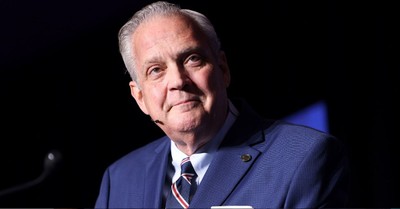
Theologian and cultural commentator Albert Mohler is speaking out against the proposed livestreaming of Nidal Hasan’s execution, arguing that it would make Hasan a martyr among Islamic extremists and undermine the interests of the United States.
Mohler made the remarks Monday on his podcast "The Briefing," less than a week after Defense Secretary Pete Hegseth said the public would be able to watch, via livestream, the firing-squad execution of Hasan, the former Army major who killed 13 people and wounded 32 others at Fort Hood, Texas, in 2009.
“I am a big believer in the death penalty,” Mohler said, citing Genesis 9 while asserting that “if you slay an image bearer, then as an image bearer, you must die.”
But livestreaming the execution of Hasan would backfire, Mohler said. He serves as president of Southern Baptist Theological Seminary in Louisville, Ky.
“I don’t think that’s a good idea,” he said.
Broadcasting the execution to the world would be “giving our enemies the ammunition of seeing a man who intended to be a martyr in the name of Islamic terrorism — made by their definition a martyr for Islamic terrorism.”
The video, he said, would be “repeated over and over” by America’s enemies.
“I do not believe that such a thing is in the best interest of the United States of America, of our peace and order and righteousness and our national security. The issue in this is not so much what’s fair or unfair for a mass murderer. Frankly, at this point, that’s not really the issue. The question is what is and is not in the right interest, the best interest, of the United States of America and the cause of justice.”
Mohler also noted that Great Britain ended public executions in the mid-1800s “not because of their concern about the people who needed not to see it but because [of] their concern of the people who seem to be drawn to it.”
“And the same thing has happened elsewhere in the world,” he said. “That’s one of the reasons why among the last nations practicing public executions, it’s basically rogue nations who want that kind of reputation.”
Great Britain abolished public executions in 1868 after they became spectacles that drew crowds seeking entertainment, with vendors selling food, drink and souvenirs nearby. Thomas Hobhouse, a member of Parliament at the time, argued that spectators “became hardened and literally acquired a taste for blood.” Author Charles Dickens spoke out against public executions after attending one.
“There are moral issues to this. I don’t think they’re simplistic, but the bottom line is there is a reason why public executions have been drawn to a close,” Mohler said.
A public execution that “serves our enemies,” he said, is “a step too far.”
“President Trump says he’s going to bring the entire issue into consideration, and I just hope that the issues I’ve raised are at least a part of that consideration.”
Photo Credit: ©Wikimedia
Michael Foust has covered the intersection of faith and news for 20 years. His stories have appeared in Baptist Press, Christianity Today, The Christian Post, the Leaf-Chronicle, the Toronto Star and the Knoxville News-Sentinel.
Listen to Michael's Podcast! He is the host of Crosswalk Talk, a podcast where he talks with Christian movie stars, musicians, directors, and more. Hear how famous Christian figures keep their faith a priority in Hollywood and discover the best Christian movies, books, television, and other entertainment. You can find Crosswalk Talk on LifeAudio.com, or subscribe on Apple or Spotify so you never miss an interview that will be sure to encourage your faith.